


Companies have changed. Work dynamics, communication methods, and team needs have evolved as well. Today, building a cohesive team goes far beyond organizing a one-off activity or a recreational event. Teams need meaningful experiences that help generate trust, strengthen communication, and create genuine connections.
In this context, creative team building activities have gained prominence. They not only provide fun or a break from routine, but can also become powerful tools for developing personal and professional skills.
In this article, we share ideas, benefits, and examples of creative team building activities, especially designed for companies seeking original, participatory experiences with a lasting impact.
What Are Creative Team Building Activities?
Creative team building activities are experiences designed to improve relationships among team members through participatory, original, and often experiential methodologies.
Unlike traditional activities based solely on competition or entertainment, these activities aim to:
- Improve internal communication
- Foster trust
- Stimulate creativity
- Encourage collaboration
- Strengthen the sense of belonging
- Create memorable shared experiences
Many companies discover that teams do not simply need to “do an activity,” but rather to live an experience that has meaning and leaves a lasting impression.
Why Are Companies Looking for Original Team Building Experiences?
Repetitive or overly predictable formats often generate little engagement. When people perceive an activity as an obligation or an experience without real value, its impact is usually limited.
For this reason, there is an increasing demand for original team building experiences, especially among organizations that want to nurture corporate culture and enhance employee well-being.
A study published in the Small Group Research Journal concluded that well-designed team building activities can significantly improve team cohesion, communication, and performance.
External source: Does Team Building Work? Small Group Research
When an experience is creative, inclusive, and emotionally meaningful, participants tend to become more engaged and remember it for a long time.
Benefits of Creative Team Building Activities
The benefits go far beyond simply having fun. When supported by an appropriate methodology, these activities can positively influence the company’s day-to-day operations.
1. They Improve Communication
Many workplace conflicts arise from communication issues. Creative activities create spaces where people can listen, coordinate, and express themselves in a different and more natural way.
2. They Strengthen Trust
Trust is a key element in any team. Sharing challenges and experiences helps break down barriers and build more authentic relationships.
3. They Stimulate Creativity
Stepping outside the routine activates new ways of thinking. Creative experiences encourage mental flexibility and collaborative problem-solving.
4. They Increase Motivation
Feeling part of a cohesive and valued group has a direct impact on motivation and commitment.
5. They Create Shared Memories
Emotional experiences create lasting memories. This helps consolidate team identity and strengthen corporate culture.
Ideas for Creative Team Building Activities
There are many possible options. The key is choosing activities that align with the company’s objectives and culture.
1. Musical and Rhythm-Based Experiences
Music is a universal language and an extraordinary tool for developing coordination, listening skills, and team cohesion.
Rhythmic activities allow very different people to collaborate without requiring prior knowledge while working toward a common goal.
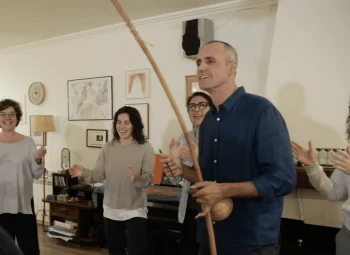
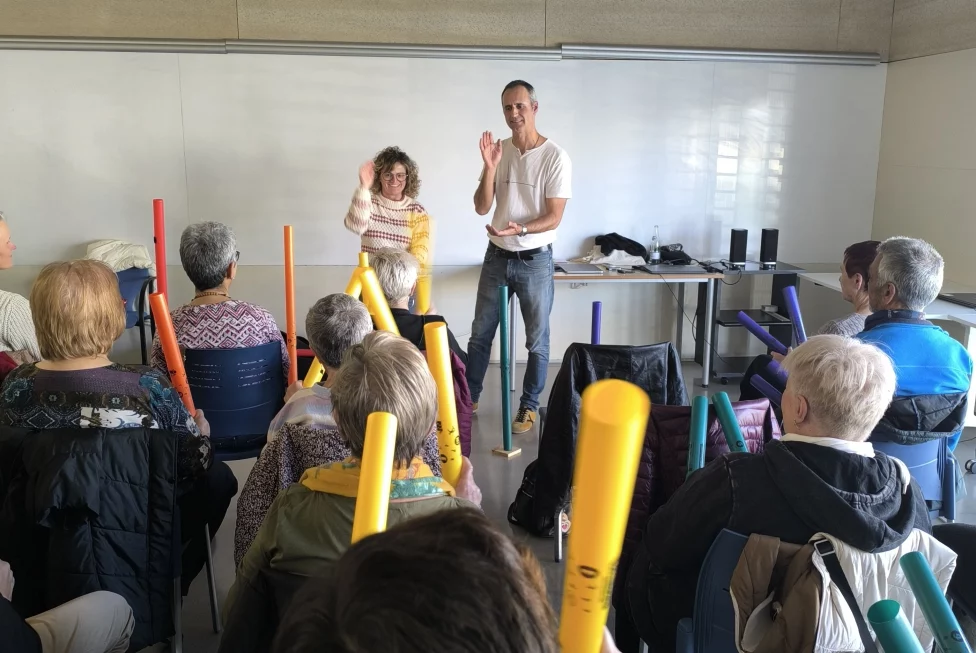
From my experience, activities such as Corella Music Experience create spaces where team members stop focusing on roles or hierarchies and connect through participation and shared energy.
2. Body Percussion
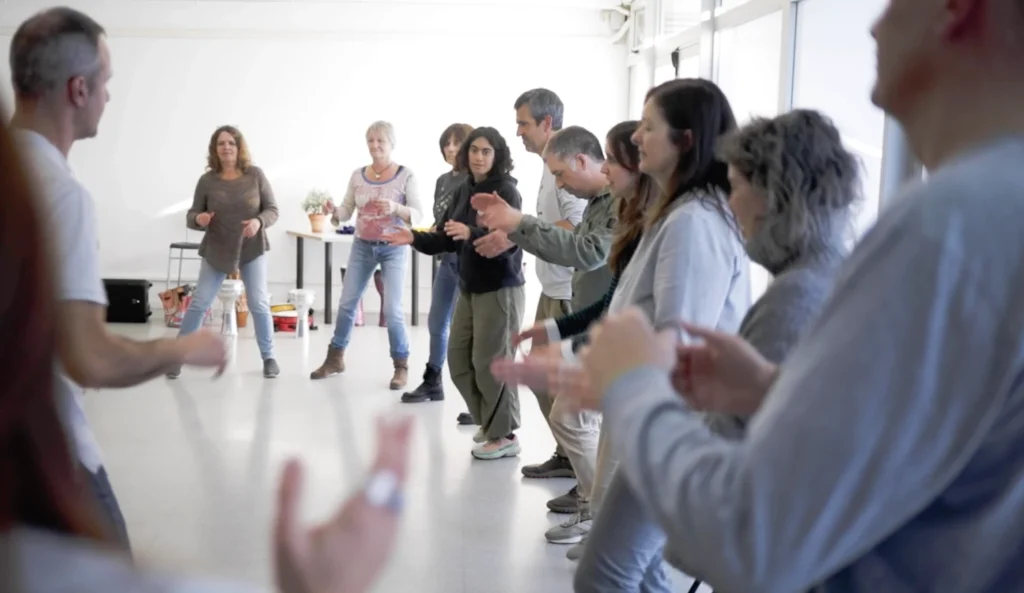
Body percussion is an especially powerful activity because it turns the body into an instrument.
It develops:
- Coordination
- Attention
- Presence
- Active listening
- Group synchronization
It is an inclusive, dynamic, and highly participatory activity that helps people step outside their comfort zones in a positive way.
In activities such as Body Percussion, participants quickly discover that success depends on the group, not just individual effort.
3. Collaborative Creativity Workshops
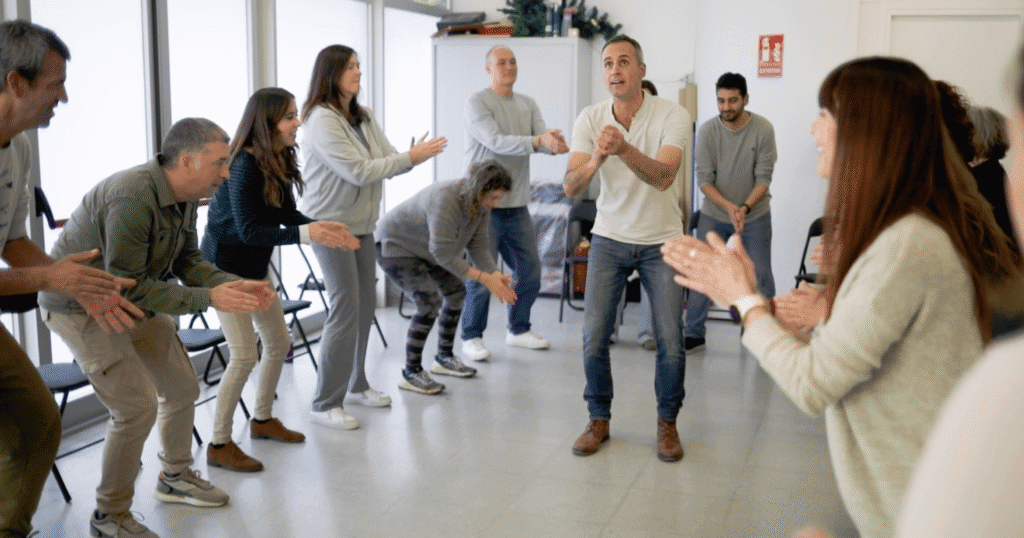
Artistic activities or collective creation projects are also excellent options.
They may include:
- Collaborative building projects
- Visual storytelling
- Theatrical dynamics
- Improvisation
- Creating a shared project
These experiences help uncover new skills and encourage cross-functional participation.
4. Transformative Rhythm-Based Experiences
When rhythm is combined with human and organizational development objectives, particularly transformative experiences emerge.
This is the approach behind initiatives such as Rhythms That Transform, where music and participation become tools for strengthening cohesion and generating shared learning.
5. Escape Rooms Adapted for Companies
Escape rooms remain a popular option when the goal is to develop problem-solving and coordination skills.
However, it is important that the activity has a clear purpose and is not limited solely to competition.
6. Outdoor Activities
Outdoor experiences can be highly effective when seeking cooperation dynamics or a break from the usual environment.
Collaborative hiking, group challenges, or immersive activities can work very well depending on the team’s profile.
How to Choose the Right Activity?
There is no single perfect activity for everyone.
To make the right choice, it is advisable to analyze:
- Company objectives
- Participant profiles
- Group size
- Available time
- The team’s current context and situation
Before selecting an activity, it is useful to ask a few questions:
- Do we want to improve communication?
- Do we need to strengthen cohesion?
- Are we looking to increase motivation?
- Have there been recent organizational changes?
- Do we want to create an emotional impact?
The answers will help identify which type of experience can provide the greatest value.
Corporate Activities in Barcelona: What Are Companies Looking for Today?
The demand for corporate activities in Barcelona and throughout Catalonia has evolved significantly.
Many organizations are no longer looking only for a fun activity, but for experiences aligned with:
- Employee well-being
- Healthy leadership
- Corporate culture
- Inclusion
- Meaningful participation
- Experiential learning
Barcelona has established itself as a particularly active environment for developing these types of initiatives, with companies open to new formats and creative methodologies.
Frequently Asked Questions About Creative Team Building Activities
Which Team Building Activities Work Best?
It depends on the objectives and the team’s profile. Creative and participatory activities generally generate greater engagement than purely competitive experiences.
Do Participants Need Artistic or Musical Skills?
No. Rhythm- and creativity-based activities are designed so that anyone can participate.
How Long Does a Team Building Activity Last?
It can range from one hour to a full-day event, depending on the objectives and format.
Are Creative Activities Suitable for Large Teams?
Yes. Many musical and rhythm-based dynamics work especially well with large groups because they encourage participation and collective coordination.
Conclusion
Creative team building activities are much more than a trend. They represent a new way of understanding team cohesion and development.
When an experience succeeds in emotionally engaging people, improving communication, and creating shared memories, its impact often extends far beyond the event itself.
From my experience working with rhythm, music, and participation, I have seen that teams connect more effectively when they share authentic, creative, and meaningful experiences.
For this reason, choosing an original team building experience is not just a matter of innovation—it is an investment in people and team culture.