



Companies have changed, and the way teams work has changed too.
Today, many organizations are no longer looking solely for recreational activities to “build team spirit.” They need experiences capable of improving communication, strengthening cohesion, and creating genuine connections between people.
In this context, tailor-made team building has become one of the most effective tools for fostering well-being, trust, and collaboration within teams.
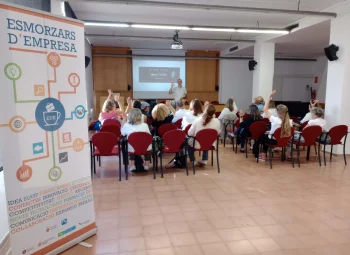
From my experience leading rhythm and music workshops for companies in Barcelona and Catalonia, I have seen that music has a unique ability: making people listen, participate, and collaborate in a natural, experiential, and authentic way.
When a group manages to enter a shared rhythm, very interesting things happen:
- collective attention increases,
- listening improves,
- tensions are reduced,
- and a real sense of connection emerges.
And that is precisely what many companies need today.
What Is Tailor-made Team Building?
A tailor-made team building activity is designed specifically according to a team’s needs, objectives, and reality.
Unlike standard activities, a personalized proposal makes it possible to adapt:
- group size,
- energy level,
- cohesion objectives,
- leadership style,
- the company’s internal situation,
- and the type of experience to be created.
This is especially important in team cohesion activities, because every organization has different dynamics.
It is not the same to work with:
- a newly formed team,
- a growing company,
- departments with limited communication,
- hybrid teams,
- or organizations that have gone through change processes.
That is why musical and rhythmic experiences work so well: they can easily adapt to the group and create a highly powerful shared experience.
Why Is Music So Effective in Team Cohesion Activities?
Music simultaneously activates emotional, physical, and cognitive aspects.
When a group creates rhythms together, people need to:
- listen to one another,
- coordinate,
- adapt,
- cooperate,
- and maintain shared attention.
This process creates a much deeper connection than many traditional corporate activities.
Rhythm forces the group to stay present.
And this has a direct impact on key aspects within teams:
- communication,
- trust,
- cohesion,
- flexibility,
- creativity,
- and the ability to work together.
Research in psychology and group neuroscience shows that synchronization between people has a direct impact on team cohesion and performance. A study published in Scientific Reports shows that behavioral and physiological synchrony among group members is associated with higher levels of cooperation and performance.
You can read the full study here:
Physiological and Behavioral Synchrony Predict Group Cohesion and Performance
And that is precisely what happens during a well-led musical experience.
Benefits of Musical Team Building for Companies
Improved Internal Communication
Many problems within teams do not come from a lack of information, but from a lack of listening.
Rhythm dynamics require people to pay constant attention to the group. This helps improve genuine communication between colleagues and departments.
Greater Team Cohesion
When a group manages to create something together through rhythm, a very strong sense of belonging emerges.
The objective stops being individual and becomes collective.
These types of team cohesion activities are especially helpful for:
- integrating new members,
- breaking down hierarchical barriers,
- improving internal relationships,
- and strengthening trust.
Reduced Stress and Built-Up Tension
Music and movement allow people to step away momentarily from their usual mental dynamics.
This helps teams reduce tension, reconnect, and recover energy.
In many companies, this emotional decompression has a very positive impact on the workplace environment.
Development of Creativity
Rhythm and improvisation stimulate mental flexibility and collective creativity.
People stop looking for “the right answer” and begin building together.
Strengthening Shared Leadership
In musical workshops, spontaneous leadership and new forms of participation emerge.
This makes it possible to discover highly interesting internal dynamics within teams.
Why Does Rhythm Connect People So Quickly?
Rhythm is universal.
No musical experience is required to participate in a body percussion experience or rhythmic dynamics.
This allows everyone to get involved from the very beginning, regardless of:
- age,
- position,
- personality,
- or previous experience.
Moreover, when people share movement and rhythm, the sense of judgment decreases significantly.
The group enters a shared experience where coordination, listening, and presence become more important than individual performance.
Musical Team Building Activities That Create the Greatest Impact
Body Percussion
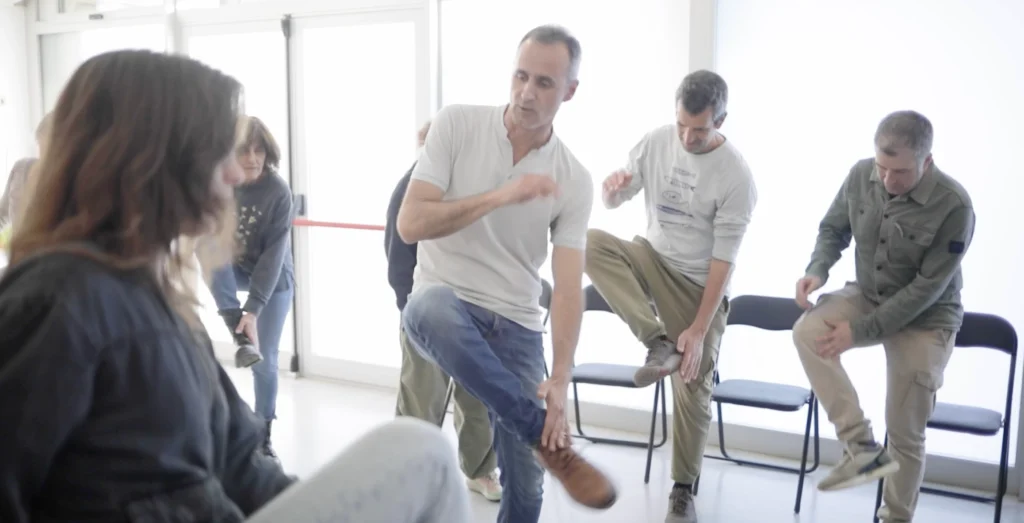
Body percussion is one of the most effective activities for working on cohesion, listening, and group energy.
The body becomes an instrument, and the group must learn to coordinate constantly.
It is a highly dynamic activity that helps to:
- energize the group,
- improve attention,
- enhance coordination,
- and create an immediate connection.
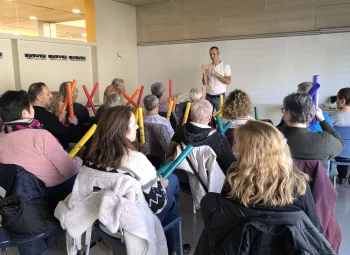
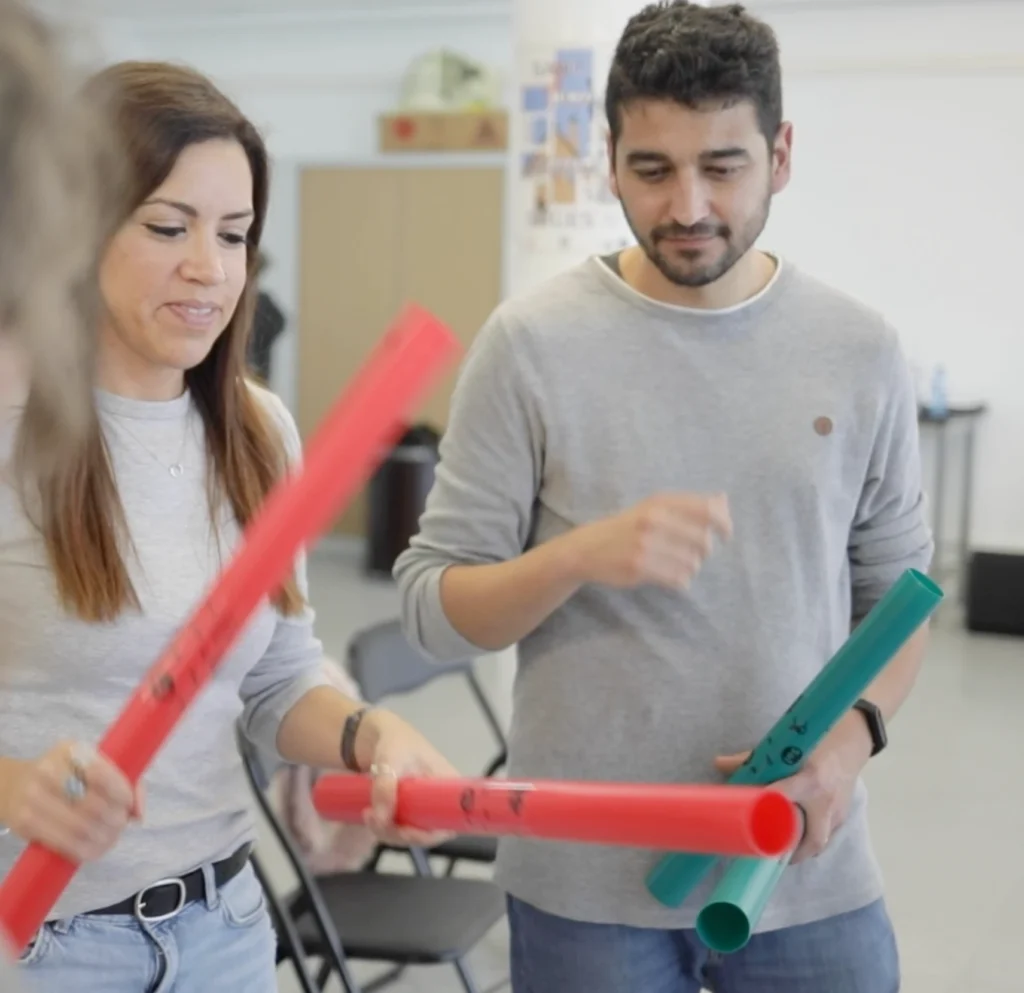
Boomwhackers
Boomwhackers make it possible to create rhythms and melodies intuitively using colorful musical tubes.
This activity works especially well in companies because it combines:
- fun,
- active participation,
- coordination,
- creativity,
- and constant communication.
Since everyone participates simultaneously, the level of engagement is usually very high.
How Is a Truly Effective Team Building Experience Designed?
Activities with impact are not based solely on “having fun.”
For an experience to work, it is necessary to understand:
- what the team really needs,
- what stage the organization is experiencing,
- and which objectives need to be addressed.
That is why, before designing any activity, I usually analyze aspects such as:
- group size,
- the type of company,
- energy level,
- internal communication,
- current challenges,
- and the main objective of the event.
From there, I adapt the dynamics so that the experience has coherence and meaning.
Which Companies Is It Recommended For?
A tailor-made team building experience with music is especially useful for:
- companies that want to strengthen cohesion,
- teams with internal tensions,
- growing startups,
- departments with limited communication,
- hybrid or remote teams,
- creative organizations,
- educational centers,
- and companies that want to improve the workplace environment.
It also works very well in:
- conventions,
- corporate events,
- annual meetings,
- change processes,
- and company events.
Tailor-made Team Building in Barcelona and Catalonia
More and more companies in Barcelona and Catalonia are looking for activities that go beyond entertainment.
Organizations value experiences capable of generating:
- real connection,
- participation,
- motivation,
- and well-being within teams.
Musical team building stands out precisely because it creates spaces where people can connect from a much more human perspective.
When a group manages to listen to one another and coordinate rhythmically, the way they work together also improves.
Frequently Asked Questions About Musical Team Building Activities
Is musical experience required?
No. The activities are designed so that anyone can participate without prior musical knowledge.
How many people can participate?
The activities can be adapted for both small groups and very large teams.
Can they take place at the company?
Yes. Workshops can be held at the company’s facilities, in external venues, or in natural environments.
How long does an activity last?
It depends on the needs of each organization. There are short formats lasting 60–90 minutes as well as half-day and full-day experiences.
Can they be customized according to objectives?
Yes. Each experience is adapted to the team’s objectives: cohesion, communication, leadership, creativity, or well-being.
Conclusion
A tailor-made team building experience can be much more than a corporate activity.
When music, rhythm, and movement are approached from an experiential perspective, they become tools capable of transforming the way a team relates.
Cohesion is not built only through talking.
It is also built through listening, coordinating, adapting, and sharing real experiences.
And rhythm has an extraordinary ability to make all of this happen naturally.