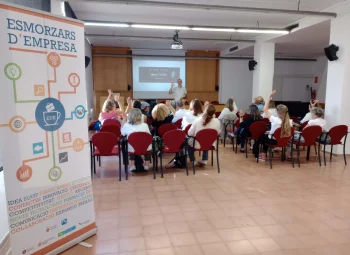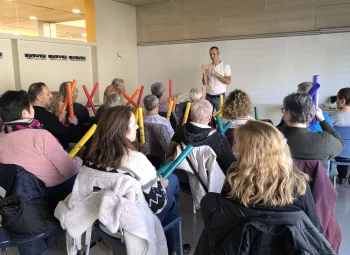



Quick summary: team building with simple instruments is a methodology that uses basic percussion instruments, everyday objects and the body itself to create rhythms as a group. In 60- to 90-minute sessions, a team can improve communication, reduce stress and strengthen cohesion without any prior musical knowledge. In this article, I explain which activities work best, which instruments to use and how to design a memorable experience for your team.
What is team building with instruments?
Team building with instruments is a team cohesion activity in which participants play collective rhythms using simple percussion instruments — sound tubes, tambourines, claves, musical eggs — or their own bodies. The goal is not to learn music, but to experience something together in which each person contributes their pulse to the group. The result is a unique sound that only exists because everyone is present.
For years, I have been facilitating these types of sessions for companies, schools and organisations throughout Catalonia, and I can state one thing categorically: you don’t need to know music to enjoy it. In fact, the fewer musical expectations there are, the deeper the connection that develops within the group.
Why it works: the proven benefits of musical activities for companies
Musical activities for companies have a solid scientific basis. Several studies have shown that playing music in a group activates brain synchronisation mechanisms, releases dopamine and reduces cortisol (the stress hormone). As highlighted by the American Camp Association, playing together can even transcend language barriers and create connections where verbal communication fails.
The most relevant benefits for a work team are:
- Improved non-verbal communication: playing together requires listening to and observing others.
- Stress reduction: rhythm regulates the nervous system within minutes.
- Increased cohesion: sharing a common pulse creates a sense of belonging.
- Creativity stimulation: rhythmic improvisation breaks rigid thought patterns.
- Equality among participants: rhythm does not distinguish between hierarchies, positions or ages.
Which simple instruments work best?
The good news is that you don’t need professional equipment. The most effective instruments for team building with instruments are precisely the most accessible ones:
1. Boomwhackers
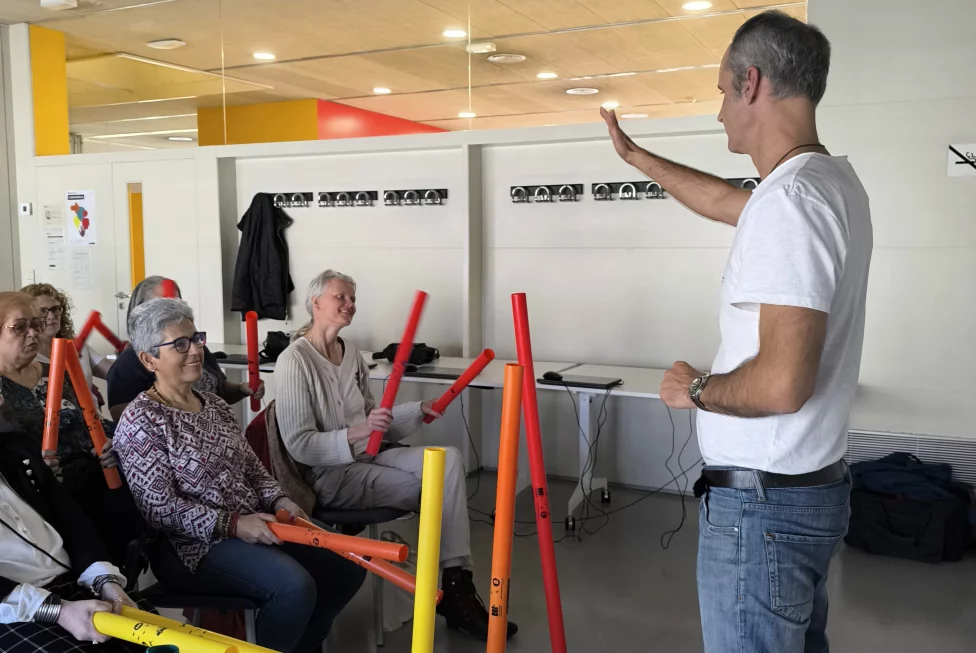
These are coloured plastic tubes that make a sound when you hit them. Each tube corresponds to a musical note and, together, they allow entire melodies to be played by assigning one note to each person. They are the perfect instrument for groups with no previous experience: in five minutes, a team of twenty people can play a recognisable song. If you want to explore this activity further, you can check out the specific Boomwhackers session that I facilitate for companies and organisations.
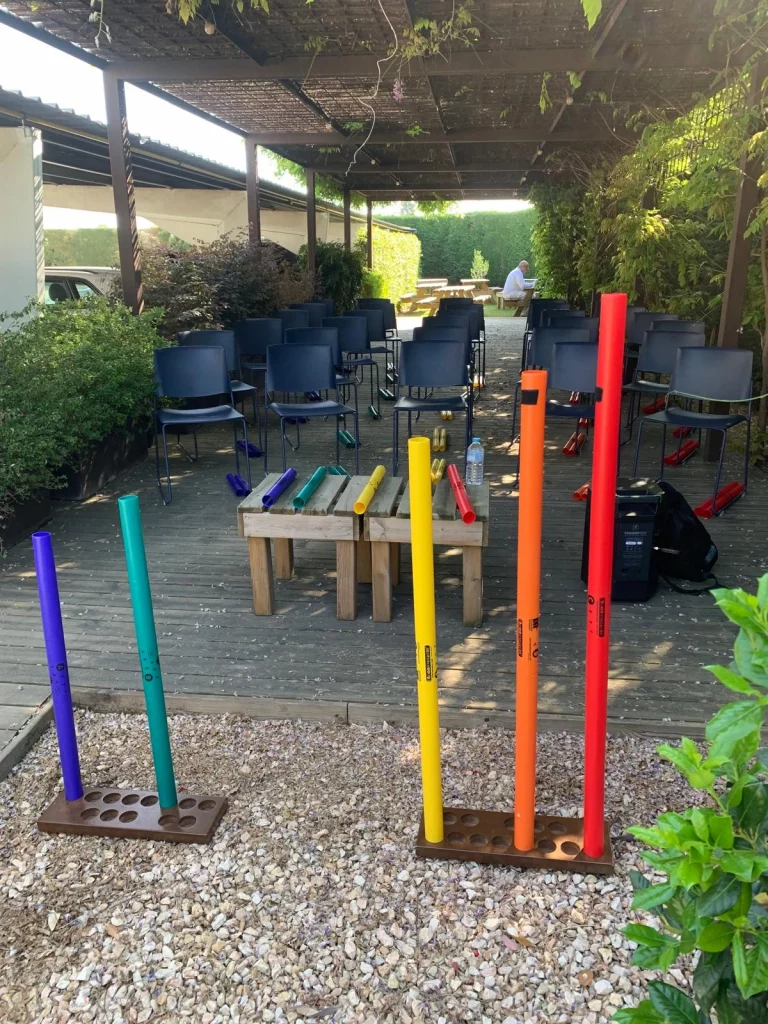
2. Hand percussion
Tambourines, claves, maracas, musical eggs or small rhythm boxes. They are intuitive, require no technical skills and allow you to create very rich rhythmic layers with few resources.
3. Everyday objects
Buckets, bottles, chairs, tables, plastic cups. Any object can become an instrument. This option is very powerful because it demystifies music and demonstrates that rhythm can be found anywhere.
4. The body itself
Clapping, chest tapping, foot stomping, voice. Body percussion is probably the most equalising tool there is: everyone carries it with them and everyone knows intuitively how to use it.
10 team building activities with simple instruments
These are some of the rhythm activities for teams that work best in practice. I have tested all of them in corporate settings, and all can be adapted to groups of 5 to 100 people.
1. The collective pulse
Everyone stands in a circle, maintaining the same pulse with their hands or an instrument. It sounds simple, but maintaining a common pulse for three minutes is a powerful exercise in collective listening.
2. Travelling rhythm
One person proposes a short rhythm and passes it to the next person. The challenge is to maintain the chain without losing the rhythm. Perfect for working on attention and individual responsibility.
3. Rhythmic dialogue in pairs
Two people “converse” through rhythm. One plays a rhythmic phrase and the other responds. This develops active listening and the ability to respond without interrupting.
4. The shared melody with Boomwhackers
One tube is given to each person and the group learns a familiar song. Each person only plays when their note comes up. Nobody can do it alone; the melody only sounds when everyone plays together.
5. Rhythmic layers
The group is divided into three or four subgroups, each with a different rhythmic pattern. When everyone plays at the same time, a complex soundscape emerges from simple elements.
6. Solo and tutti
Everyone plays a common pattern, and each person gets a moment to perform a solo. This develops individual confidence and group support.
7. Guided improvisation
The facilitator conducts using gestures: increase the volume, lower it, change the tempo, stop. It is a perfect metaphor for leadership and responding to change.
8. Silent rhythm
The group plays together, but halfway through the session everyone stops making sound and continues mentally. When the facilitator gives the signal, they start playing again. The surprise is discovering that they are still synchronised.
9. The body percussion chain
Each person adds a body sound to the previous person’s contribution until a complex piece is built. It is ideal for starting sessions because it requires no equipment.
10. Collective composition
The group composes a short piece using the available instruments. This develops decision-making, consensus and applied creativity.
How to design a team building session with instruments
A well-designed session follows a clear structure. This is the structure I usually use in the musical activities for companies that I facilitate:
- Warm-up (10 min): simple body percussion to activate the body and the group.
- Exploration (15 min): introduction to the instruments and first improvisations.
- Core activities (30-40 min): three or four exercises that progressively increase in difficulty.
- Collective piece (15 min): the group creates or performs a piece together.
- Closing (10 min): shared reflection on the experience.
This structure is the basis for proposals such as Corella Music Experience, where I combine simple instruments, body percussion and moments of reflection to create a transformative experience in just over an hour.
Common mistakes to avoid
After facilitating hundreds of sessions, these are the mistakes I see companies make most often when they try to organise these activities on their own:
- Wanting it to sound “good”: the goal is not musical, but relational. Seeking perfection blocks the group.
- Leaving out those who “don’t know”: nobody “knows” and everyone can participate. Filtering people based on musical ability destroys the activity.
- Making it too short: less than 45 minutes does not allow enough time to reach a deeper connection.
- Combining it with meetings or presentations: the experience needs its own space.
- Not having professional facilitation: a trained facilitator can identify blocks and adapt the rhythm to the group.
Who is it for?
Team building with simple instruments is especially recommended for:
- New teams that need to break the ice quickly.
- Established teams that want to renew their connection and break out of their routine.
- Mergers or integrations of companies or departments.
- Year kick-offs or new project presentations.
- Conventions and corporate events with large groups.
- Retreats or off-sites where emotional depth is sought.
For teams looking for a more intense and transformative experience, the Rhythms that Transform proposal combines instruments, movement and deep listening in sessions that go beyond conventional team building.
Frequently asked questions about team building with instruments
Do I need to know music to participate?
No. None of the activities I facilitate require prior musical knowledge. In fact, groups without musical training often experience the activity with greater freshness and fewer preconceptions.
How many people can participate in a session?
Sessions can be adapted to groups ranging from 5 to more than 100 people. The activity changes depending on the group size, but the experience is equally powerful.
How long does a team building activity with instruments last?
The standard duration is 60 to 90 minutes. For deeper experiences, half-day or full-day sessions can be designed.
Is a special space required?
Only a spacious, obstacle-free area where the group can move around comfortably. It can be held in meeting rooms, auditoriums, courtyards, gardens or natural spaces.
Do we need to bring the instruments?
No. I bring all the instruments required for each session. The team only needs to come wearing comfortable clothes and with a willingness to participate.
Can it be done outdoors?
Yes. In fact, open spaces amplify the energy of the group and add a highly rewarding sensory dimension.
Conclusion: rhythm as a team language
Team building with simple instruments is not a trend: it is a tool with centuries of tradition adapted to today’s corporate context. At a time when teams are overloaded with screens, meetings and information, offering an experience that reconnects people through the body and sound is a gift — and an investment in team culture.
If you would like to bring an experience like this to your company, educational centre or event in Barcelona or anywhere in Catalonia, you can contact me with no obligation and we will design a session tailored to your team.