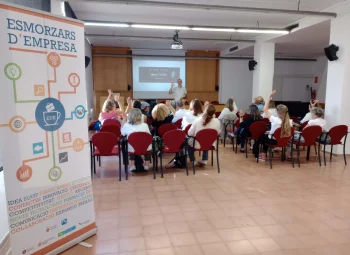




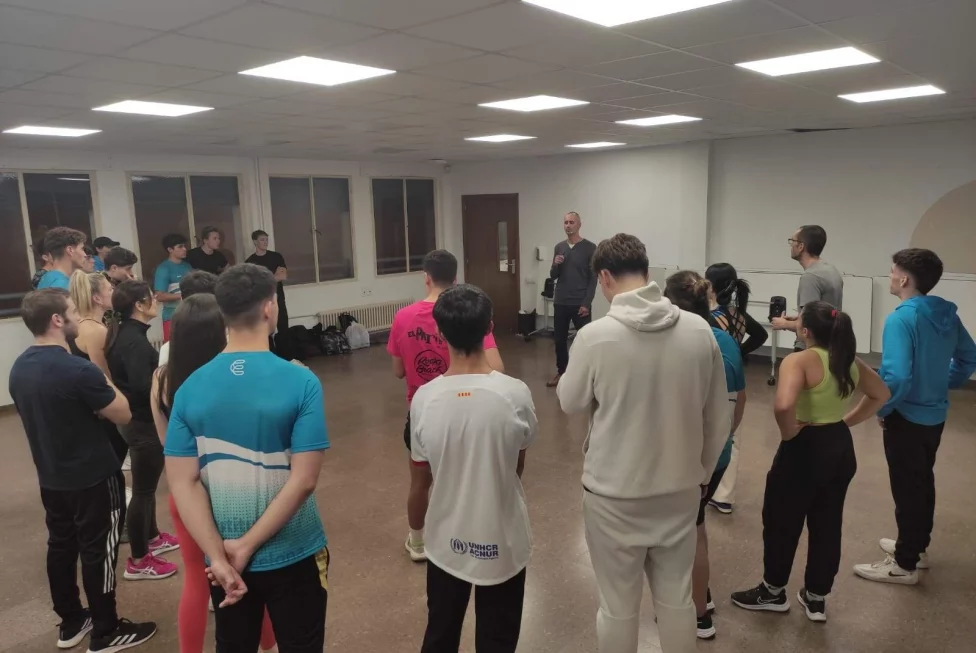
An activity that works especially well with teenagers is percussion coaching. For years I have been offering this proposal in high schools, educational spaces, and youth activities, and the feedback is usually very positive. The reason is quite clear: it combines expression, active participation, creativity, and teamwork in a highly experiential way that is far removed from the conventional academic format.
Adolescence is an intense stage of life. There are constant changes, a need for belonging, insecurities, a need for self-expression, and at the same time, a lot of accumulated energy. Teenagers are often asked to listen, memorize, and achieve objectives, but they are not always offered a space where they can create, decide, and build together. This is where music, rhythm, and percussion for teenagers can play a very powerful role.
When I talk about percussion coaching, I am not referring to therapy or to a traditional music class. It is a group process in which participants have a voice, decide on objectives, and learn to coordinate in order to turn an idea into reality. Rhythm becomes a tool for developing skills such as listening, attention, communication, creativity, and cooperation.
How do we begin?
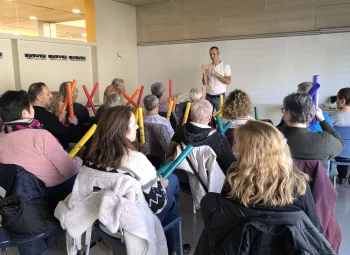
Normally, the process begins with introductions and some icebreaker games to build trust and create a more relaxed atmosphere. From there, we explore different rhythm and percussion disciplines that I regularly use: body percussion, boomwhackers tubes, and drum circles. The fact that no previous musical experience is required is extremely important. Anyone can participate from the very first moment.
Body percussion greatly helps activate the group and connect with one’s own body. It also allows participants to work on coordination, concentration, and memory in a very dynamic way. Boomwhackers bring color, playfulness, and an immediate sense of shared music-making. And the drum circle generates cohesion and a very physical group experience, in which each person has a role within the ensemble.
Different studies and professionals in the fields of music and emotional development highlight that rhythm and percussion activities can encourage group cohesion, communication, and emotional self-regulation in children and teenagers. You can read more in this Psychology Today article about the benefits of drumming: Drumming for Development: How Drumming Helps Children.
Brainstorming
After this first exploration comes one of the most interesting parts: brainstorming. The group decides what they want to create using the tools they have just discovered. This point is key because it transforms the participants into creators. They are no longer just students taking part in a guided activity; they become an active part of the project.
The ideas can vary greatly. Sometimes the result is the creation of a collective rhythmic piece. Other times, the idea of creating a Stomp-style scene emerges, combining movement, theater, and percussion. There may also be a desire to invent new exercises, create choreographies, or even prepare a small final performance to share with classmates or families.
Action plan
Once the objective has been defined, we create an action plan. Here, many elements typical of team coaching appear: role distribution, organization, decision-making, and shared responsibility. Each session usually begins with a short group cohesion or reflection activity, and then we move into the practical work of the project.
If, for example, a musical piece is created, different groups can be assigned to each discipline: one group works on body percussion, another on boomwhackers, and another on drums. Later, all the parts are connected. This process requires constant listening and coordination.
When working on a theatrical scene, new roles may appear: who writes, who directs, who creates rhythms, who proposes movements, or who helps structure everything. This allows teenagers with very different profiles to find their place within the group.
One of the most interesting things is seeing how the participants’ energy changes over time. Teenagers who are initially shy or disconnected often become fully involved when they feel they are part of a shared creation. Rhythm has this ability: it connects people in a very direct and deeply non-rational way.
Percussion coaching and group cohesion
Percussion coaching for teenagers is also a very useful tool for working on cohesion, trust, and participation within the group. Through rhythm, teenagers learn to listen to each other, adapt to others, and build a shared experience where every contribution has value.
These kinds of percussion activities for teenagers make it possible to move beyond the usual roles that develop within a classroom group or educational environment. Teenagers who do not usually participate often find here a more natural space to express themselves and become involved.
Corporate activity approach
This approach is closely connected to the philosophy behind my Corella Music Experience activities. Although I usually work with companies and professional teams, the foundation is the same: creating shared experiences through rhythm so that people learn to listen to each other, coordinate, and create together.
In the case of teenagers, this becomes even more valuable, because many times they do not need big speeches, but rather real experiences where they can participate, experiment, make mistakes, and build something together with other people.
Rhythm is a very ancient tool, yet it continues to be extraordinarily effective in generating human connection. And when that connection appears within a group of teenagers, very interesting things happen.