


Team motivation activities have become a key tool for companies that want to improve performance, cohesion, and employee well-being. In an increasingly demanding work environment, motivating a team is not just an option, but a strategic necessity.
In this article, you will discover what these activities are, why they work, and which are the most effective for transforming a group of individuals into an aligned and committed team.
What are team motivation activities?
Team motivation activities are experiences designed to strengthen the connection between members of a work group, improve communication, and increase engagement with the company’s goals.
Unlike other training actions, these activities focus on practical, emotional, and experiential learning.
Main objectives
- Improve team cohesion
- Foster effective communication
- Reduce tensions and conflicts
- Increase motivation and commitment
- Enhance skills such as leadership and creativity
Why are they important for companies?
A motivated team is more productive, more resilient, and more aligned with the company’s vision. According to various studies, companies with engaged teams achieve better results and lower staff turnover.
According to several studies, motivation is a key factor in team performance. In fact, according to an article from Harvard Business Review, motivation can explain a significant part of the success of team projects.
Read the article on Harvard Business Review
Types of team motivation activities
1. Rhythm and music activities
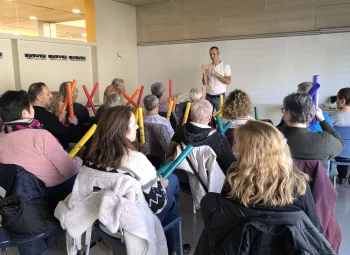
Activities based on rhythm are especially powerful because they work on group connection immediately. When a team creates music together, synchronization, active listening, and cooperation naturally emerge.
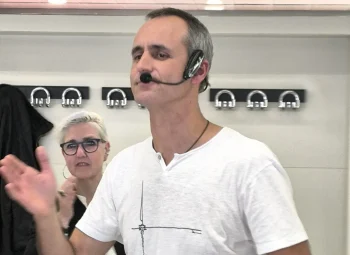
From my experience, activities such as Corella Music Experience allow teams to step out of their comfort zone and connect on a deeper level.
2. Body percussion
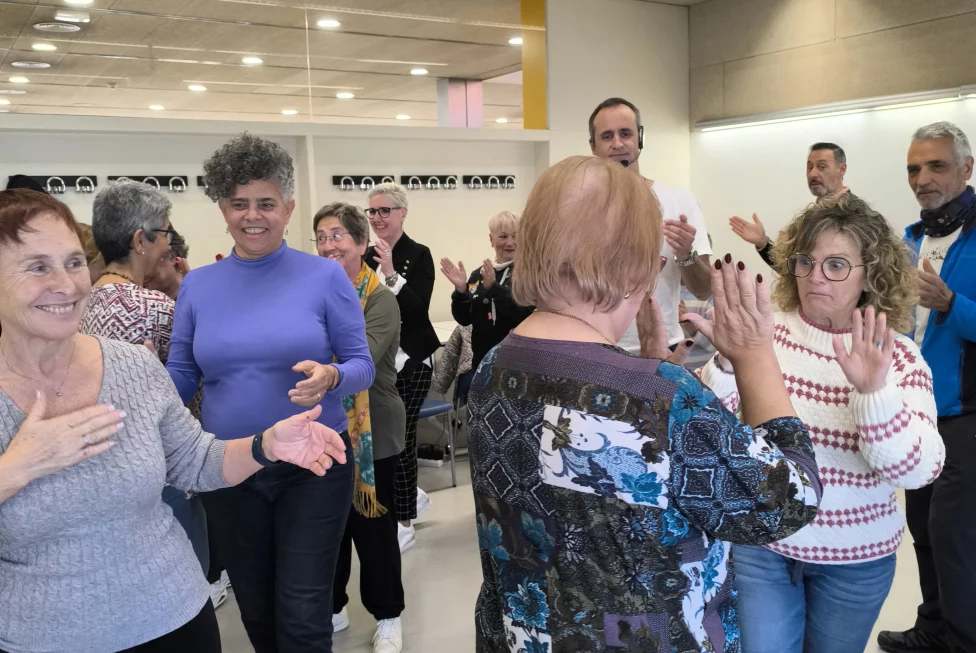
Body percussion is a very effective tool for working on coordination, presence, and teamwork without the need for instruments.
This type of activity is ideal for breaking the ice and generating positive energy in a short time.
3. Rhythmic awareness experiences
Methodologies such as Taketina go beyond rhythm and work on internal connection, error management, and concentration.
They are especially useful for teams with high levels of stress or pressure.
4. Classic team building activities
- Escape rooms
- Role-playing games
- Problem-solving dynamics
These activities work well to foster decision-making and collaboration.
5. Personal development workshops
They include sessions on leadership, communication, or emotional intelligence. Although more theoretical, they can effectively complement experiential activities.
Benefits of team motivation activities
Improved cohesion
Teams that share experiences outside their usual context develop stronger bonds.
Increased productivity
A motivated team works with more energy and efficiency.
Reduced stress
Recreational activities help disconnect and reduce accumulated pressure.
Improved communication
Many dynamics require better listening, expression, and coordination.
Greater commitment to the company
When employees feel valued, their level of engagement increases.
How to choose the best activity for your team
1. Define the objectives
Seeking cohesion is not the same as improving leadership.
2. Analyze the team profile
Age, culture, energy level, and predisposition are key factors.
3. Choose experiential activities
Practical experiences have more impact than theoretical ones.
4. Look for specialized professionals
Good facilitation makes the difference between an adequate activity and a transformative experience.
Real-life application examples
I have worked with teams from different sectors, from technology companies to educational centers. In many cases, after a rhythm session, teams experience:
- Greater trust among members
- Improved work environment
- Higher willingness to collaborate
These types of results are not achieved through theory alone, but through shared experiences.
Frequently asked questions (FAQ)
What are the best team motivation activities?
The most effective are experiential ones, such as music, rhythm, or participatory dynamics.
How long do these activities last?
They can range from 1 hour to full-day sessions, depending on the objective.
Do they work for large teams?
Yes, many activities are designed to adapt to groups of any size.
Are they useful for small companies?
Absolutely. In fact, in smaller teams the impact can be even more direct.
Conclusion
Investing in team motivation activities is not an expense, but an investment in the company’s human capital.
When a team is connected, motivated, and aligned, results come naturally.
From my experience, rhythm and music are extraordinary tools to generate this connection quickly and deeply.
If you want to transform your team, start by letting them live a different experience.