


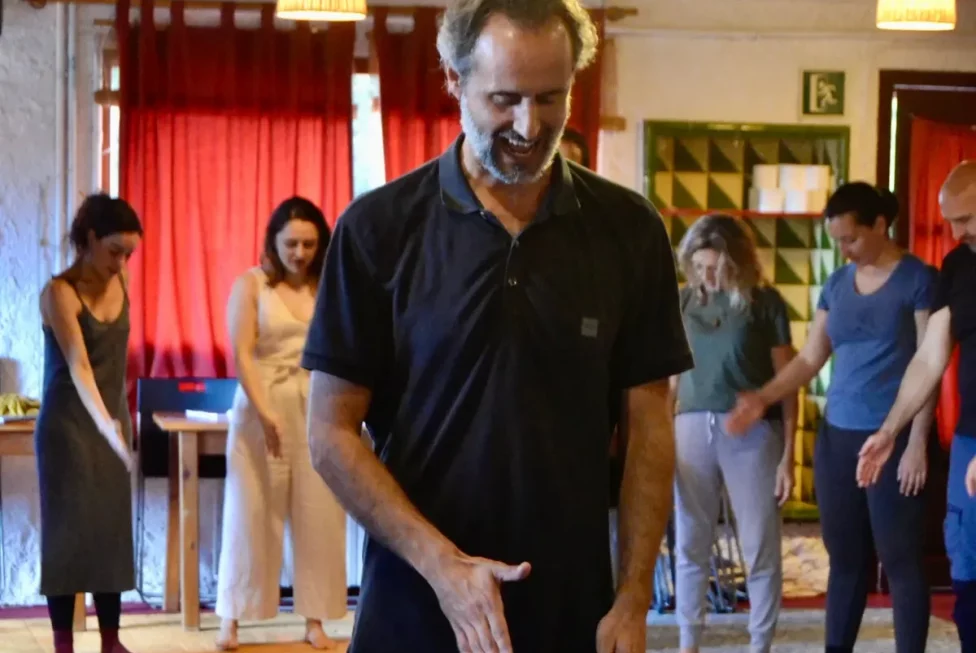
Since the dawn of humanity, human beings have struck their chests to say “this is me”, stamped their feet on the ground in search of a longed-for sense of belonging, and clapped their hands together to celebrate festive events.
Generation after generation, these innate gestures have evolved into different dances from around the world.
The evolution of body percussion
Nowadays, and for the past few decades, body percussion has become a highly refined and sophisticated form of artistic expression that allows each practitioner to create unique sounds and rhythmic patterns, pushing their motor and musical abilities to the limit. In addition, the benefits of body percussion are increasingly valued at a physical, emotional and social level.
Artists from all over the world express themselves in this way, either solo or accompanied. Reference groups include Molodi (www.molodilive.com) and Stomp (https://www.stomp.co.uk/), among many other highly interesting projects.
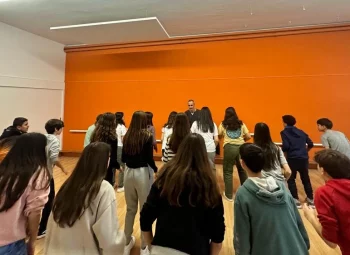
In the educational field, body percussion has made a strong entrance into classrooms, as educators have recognised the benefits of body percussion in the holistic development of students.
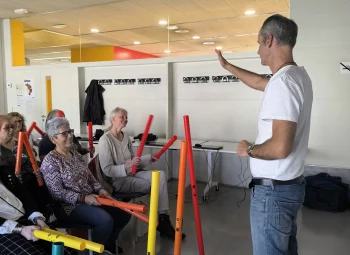
For this reason, I offer body percussion not only in educational centres, but also in companies.
Body percussion as music therapy
And as if that were not enough, body percussion has gradually been gaining ground in the field of music therapy. Yes, striking the body can be therapeutic. A few decades ago, an interesting form of therapy known as “Tapping” emerged, which roughly means “tapping oneself”.
Tapping (also known as EFT – Emotional Freedom Techniques) is a practice that combines body stimulation with emotional awareness.
It consists of gently tapping with the fingers on specific points of the body—mainly points along the acupuncture meridians—while the person puts words and awareness to a specific emotion, thought or issue.
It is usually done by:
- Identifying a problem (fear, stress, pain, emotional block…)
- Assessing its intensity
- Gently tapping points on the body while verbalising what is happening
- Reassessing the intensity of the tension to see whether it has changed
It originated in the 1990s with Gary Craig, based on the work of psychologist Roger Callahan.
It is mainly used to treat stress and anxiety, phobias, emotional blocks, chronic pain and mild traumatic memories.
Body percussion and the Tao
Related specifically to tapping and, more generally, to the therapeutic aspect of percussion, for centuries Taoists have practised an exercise consisting of gently tapping the lower part of the sternum to massage the thymus gland, a massage that helps improve a person’s mood.
Conclusion
We see that practising body percussion is highly beneficial for the psyche, motor skills and emotions, and that the benefits of body percussion are multiplied when practised in a group. When we do so, we incorporate new skills that are highly beneficial for ourselves, our community and the company we work in: improved communication, collaboration, listening, empathy, and enhanced creativity by rooting ourselves in the present moment.
In this sense, rhythm-based activities such as Corella Music Experience are highly recommended, as they help improve soft skills within work teams.
And if a deeper, more immersive and transformative change is desired, Ritmos que transforman consists of a more extensive programme, lasting up to three days, in which Team Building, Music and Coaching are balanced and combined.