


Work motivation is one of the key factors for a team to function well. When people are engaged, motivated, and connected to what they do, the work environment improves and results improve as well. But how can this motivation be fostered within a company?
One of the most powerful tools, and often underused, is music. More and more companies are incorporating musical activities and rhythmic dynamics to improve cohesion, reduce stress, and increase team energy.
In this article we will look at how music can improve work motivation, the benefits it brings to organizations, and how it can be applied in professional environments.
What is work motivation and why is it so important?
Work motivation is the level of involvement, energy, and commitment that a person brings to their job. When this motivation is high, teams work with greater enthusiasm, creativity, and capacity for collaboration.
On the other hand, when motivation decreases, problems appear such as:
- Low productivity
- Emotional disconnection from work
- Increased work-related stress
- Poorer team climate
- Higher employee turnover
For this reason, many organizations look for new ways to activate the energy of their teams. And this is where music can play a transformative role.
The relationship between music and work motivation
Music has a direct impact on the brain and emotions. When we listen to or practice music, brain areas related to pleasure, concentration, and memory are activated.
Various studies have shown that music can:
- Stimulate dopamine, the well-being hormone
- Reduce stress levels
- Increase concentration
- Improve mood
- Encourage connection between people
According to an article published by Harvard Health Publishing, music can positively influence emotional state and reduce stress, which has a direct impact on people’s well-being and productivity.
This explains why more and more companies use music in team building activities and team development programs.
Benefits of music in the workplace
When music is used in a participatory way—not just as background music—it can generate very significant changes within a work team.
1. Improved workplace climate
Musical activities create a relaxed and informal space where people can interact in a different way from everyday work situations. This helps break down barriers and strengthen relationships between colleagues.
2. Stress reduction
Rhythm and movement help release accumulated tension. When someone participates in an active musical activity, the body relaxes and the mind temporarily disconnects from work-related concerns.
3. Increased creativity
Music stimulates creative thinking. Improvising rhythms or creating music as a group forces participants to step outside habitual patterns and encourages a more open and innovative mindset.
4. Improved communication
Many musical dynamics require active listening and coordination. These are exactly the same skills needed in teamwork.
5. Sense of belonging
When a group creates rhythm or music together, a powerful sense of unity is generated. This experience strengthens trust and the feeling of being part of the same project.
Music as a tool to improve teamwork
One of the great advantages of music is that it is a universal language. No prior musical knowledge is needed to participate in a rhythmic activity.
When a team makes music together, very interesting processes emerge:
- People must listen to each other
- They must coordinate to maintain the rhythm
- Trust develops within the group
- A shared experience is created
This dynamic strengthens essential skills for team functioning, such as cooperation, communication, and adaptability.
Musical experiences for companies
In my work with teams, I use music and rhythm as tools to create transformative experiences within organizations.
For more than twenty years I have developed methodologies that combine music, movement, and group dynamics to help teams and organizations improve their communication and cohesion.
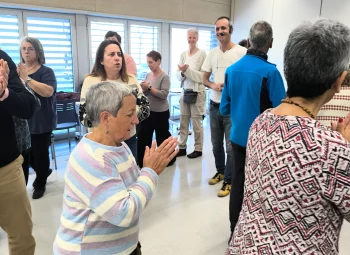
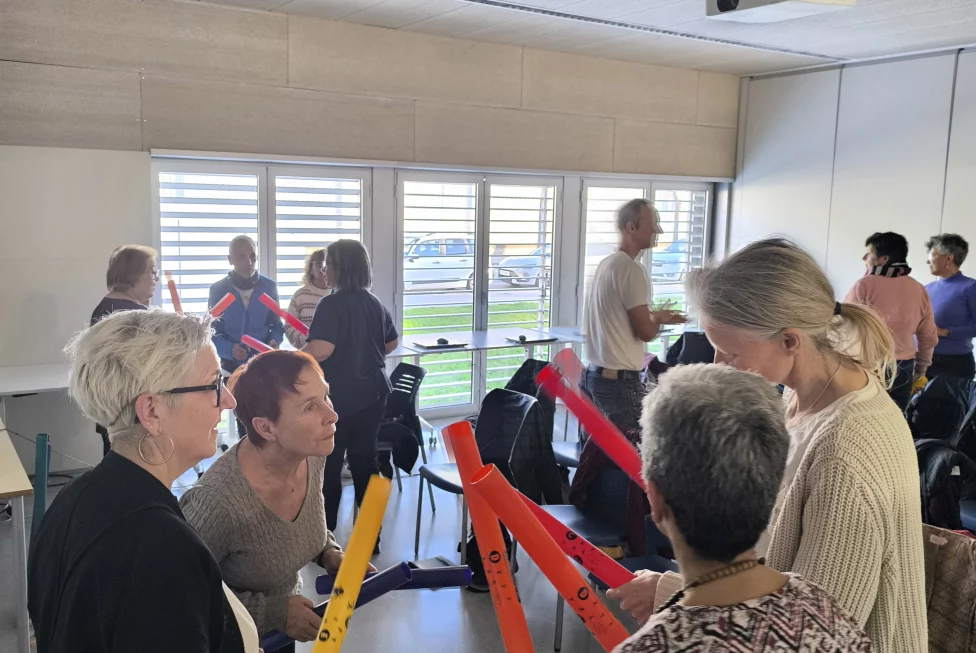
One of the experiences I offer is Corella Music Experience, a musical team building activity where participants create rhythms together using body percussion, boomwhackers, and other instruments. These types of activities generate energy, engagement, and a strong sense of connection within the group.
I also work with dynamics such as body percussion, where the body becomes an instrument and the group learns to coordinate through rhythm.
Another proposal is Rhythms that Transform, an experience that combines music, movement, and coaching to help teams explore new ways of collaboration and communication.
These activities are not only fun, but also generate learnings that can be directly transferred to everyday work situations.
Why does rhythm work so well with teams?
Rhythm is a structure that organizes time and movement. When a group of people follows the same rhythm, a phenomenon of synchronization occurs that strengthens cohesion.
This phenomenon has been observed in many contexts: from traditional rituals to team sports or collective artistic activities.
When participants share a rhythmic experience:
- the sense of connection increases
- trust between people improves
- a very powerful collective energy is generated
This energy is the foundation of motivation within teams.
How to integrate music into company culture
Incorporating music into the workplace does not mean turning the company into a permanent musical space. It means introducing specific experiences that generate impact and help reinforce team culture.
Some ways to integrate music include:
- Musical team building activities
- Rhythm and body percussion workshops
- Rhythmic dynamics during company events
- Personal development experiences for teams
The most important thing is that they are participatory and experiential activities.
Music as a driver of work motivation
In an increasingly demanding professional environment, companies need tools that help people reconnect with energy, creativity, and a sense of community.
Music is one of these tools.
When a team shares rhythm, movement, and experience, moments are created that are difficult to forget. And these moments are the ones that strengthen motivation, trust, and commitment to the shared project.
That is why more and more organizations are discovering that music is not just entertainment: it can be a powerful tool for transformation within teams.
Conclusion
Music can improve work motivation because it connects directly with emotions, reduces stress, and fosters cohesion between people.
When approached in a participatory way, rhythm becomes a very effective tool to improve teamwork, communication, and the workplace environment.
In a working world that often moves too fast, taking a moment to listen, feel, and create rhythm together can be one of the most powerful ways to reconnect with a team’s energy.
Sometimes, everything starts with a simple rhythm… and ends up transforming the way we work together.