


La body percussion in schools has established itself as a powerful pedagogical tool to work on rhythm, coordination, and group cohesion within the classroom. Beyond music, these dynamics offer cross-cutting benefits that impact students’ cognitive, emotional, and social development.
In this article, we will explore different body percussion activities for schools and high schools, as well as their benefits, practical applications, and concrete examples that can be easily implemented.
What is body percussion and why is it ideal for schools?
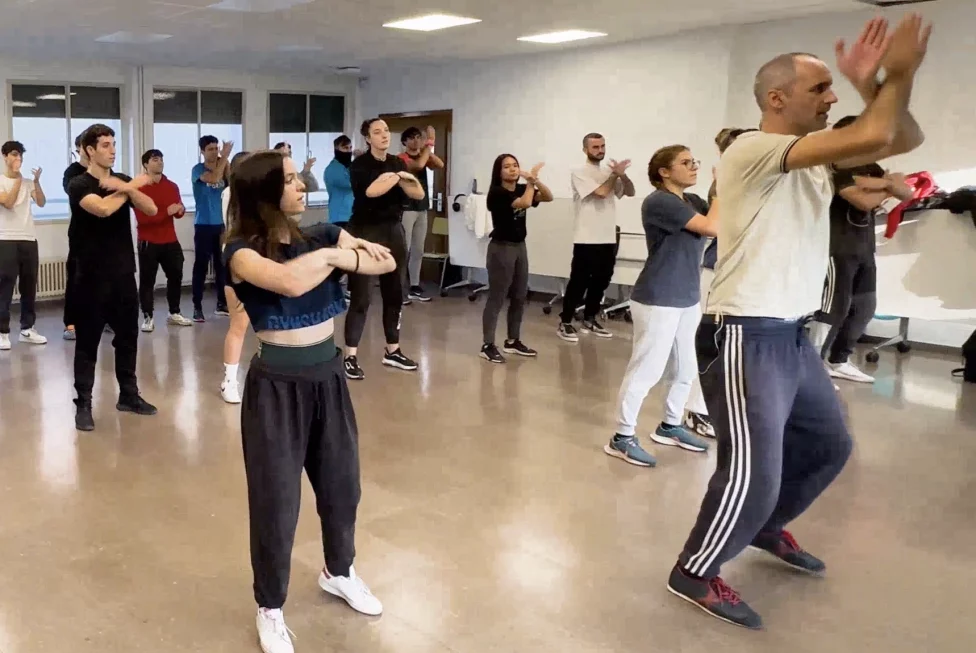
Body percussion consists of using the body itself as an instrument: hands, feet, chest, or voice to generate rhythms and sound patterns. It is an accessible, inclusive, and highly versatile discipline.
In the educational field, it stands out because:
- It does not require additional materials
- It encourages active participation
- It improves concentration and memory
- It promotes teamwork
According to studies in music education, rhythmic work contributes to the development of executive functions and language skills (Frontiers in Psychology).
Benefits of body percussion in the classroom
1. Improvement of coordination and psychomotor skills
Rhythmic activities involve coordinated movements that stimulate the connection between body and mind.
2. Cognitive development
Following rhythmic patterns helps develop memory, attention, and sequencing skills.
3. Group cohesion
Shared rhythm creates a sense of belonging and collaboration among students.
4. Emotional management
Rhythm and movement facilitate emotional expression and stress regulation.
Body percussion activities for schools and high schools
1. Rhythmic echo
The teacher or facilitator creates a rhythmic pattern and the students repeat it.
- Objective: active listening and memory
- Application: primary and secondary education
2. Collective rhythm building
Each student contributes a sound or movement that is combined with others to create a group piece.
- Objective: creativity and teamwork
3. Rhythms with movement
Integrate movement and simple choreographies with rhythmic patterns.
- Objective: body expression and coordination
4. Body percussion with words
Associate syllables or words with rhythms.
- Objective: connection with language and reading
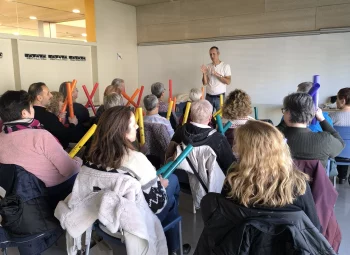
5. Activities with sound objects (boomwhackers)
Add tuned tubes to enrich the rhythmic experience.
In this sense, in my workshops such as Boomwhackers, we work on coordination and teamwork through color and sound.
Real application in schools: practical experiences
Over the years, I have developed different activities adapted to educational centers. For example:
- Body percussion: dynamic sessions to introduce rhythm in an accessible way.
- Rhythms that transform: focused on cohesion and personal development.
In these activities, I adapt the level according to the age and pedagogical objectives of the center.
How to implement body percussion in the classroom
1. Start with simple patterns
It is advisable to begin with short and repetitive sequences.
2. Progress gradually
Add complexity as the group gains confidence.
3. Integrate movement
Combining rhythm and body increases engagement.
4. Encourage participation
Give students space to create and propose rhythms.
5. Adapt to the group
Each class has its own dynamics; flexibility is required.
Body percussion and educational competencies
This type of activity directly contributes to several key competencies:
- Artistic and cultural competence
- Social and civic competence
- Learning to learn
- Cultural awareness and expression
Frequently asked questions about body percussion in schools
Is prior musical experience necessary?
No. Body percussion is accessible for all levels.
What age is appropriate?
It can be adapted from early childhood education to high school.
How long does a session last?
Between 45 and 90 minutes, depending on objectives.
Can it be integrated into non-musical subjects?
Yes, especially in language, physical education, and tutoring.
Conclusion
The body percussion in schools is much more than a musical activity: it is a comprehensive educational tool that enhances students’ overall development. Through simple yet effective dynamics, key competencies can be developed while creating a fun and meaningful experience.
If you are looking to implement this type of activity in your center, I can help you design sessions tailored to the needs of your students.